Alexander KovriginHi! I am a Junior Researcher at JetBrains, working on improving LLMs on SWE tasks using Reinforcement Learning. I am pursuing a Master's degree in Data Science under the supervision of Prof. Dr. Dmitry Vetrov at Constructor University in Bremen, Germany. I earned a silver medal at ICPC Northwestern Europe Regional Contest (NWERC 2023) and received a first prize award at the International Mathematics Competition for University Students (IMC 2023). During my Bachelor's studies, I worked in a research group under the supervision of Andrey Ustyuzhanin. Email / GitHub / Google Scholar / LinkedIn / CV |

|
Research
|

|
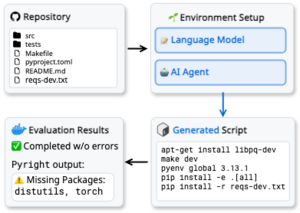
PIPer: On-Device Environment Setup via Online Reinforcement LearningAlexander Kovrigin, Aleksandra Eliseeva, Konstantin Grotov, Egor Bogomolov, Yaroslav Zharov NeurIPS 2025 Fourth Workshop on Deep Learning for Code, 2025 arxiv / code / hf / We develop a specialized LLM for automated environment setup by combining supervised fine-tuning with Reinforcement Learning with Verifiable Rewards. By evaluating on EnvBench-Python, we show that an 8B model reaches GPT-4o– and Qwen3-32B–level performance, demonstrating the effectiveness of SWE tasks training of consumer-scale models. |
|
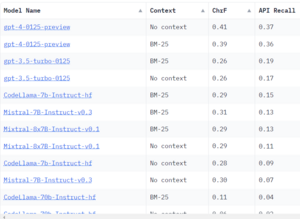
EnvBench: A benchmark for automated development environment setupAleksandra Eliseeva, Alexander Kovrigin, Ilia Kholkin, Egor Bogomolov, Yaroslav Zharov ICLR 2025 Third Workshop on Deep Learning for Code, 2025 arxiv / code / We have collected the largest dataset to date for automated environment setup and introduced a robust framework for developing and evaluating LLM-based agents that tackle environment setup challenges. By benchmarking existing LLM agents, we identified a large gap in the quality between expert-produced and LLM-generated scripts. |
|
Long Code Arena: a Set of Benchmarks for Long-Context Code ModelsEgor Bogomolov, Aleksandra Eliseeva, Timur Galimzyanov, Evgeniy Glukhov, Anton Shapkin, Maria Tigina, Yaroslav Golubev, Alexander Kovrigin, Arie van Deursen, Maliheh Izadi, Timofey Bryksin arXiv, 2024 arxiv / code / hf / Long Code Arena is a suite of benchmarks for code-related tasks with large contexts, up to a whole code repository. It currently spans six different tasks and contains six datasets. |
|
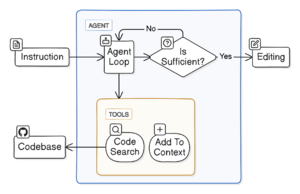
On The Importance of Reasoning for Context Retrieval in Repository-Level Code EditingAlexander Kovrigin, Aleksandra Eliseeva, Yaroslav Zharov, Timofey Bryksin arXiv, 2024 arxiv / code / We experiment with coding agents for repository-level code editing. Our findings show that more complex reasoning improves the ability to locate relevant code. |
|
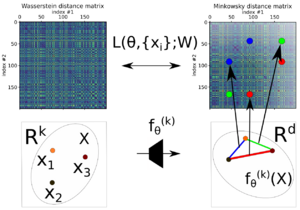
Beyond dynamics: learning to discover conservation principlesAntonii Belyshev, Alexander Kovrigin, Andrey Ustyuzhanin Machine Learning: Science and Technology, 2024 paper / We introduce a method using representation learning and topology to explore conservation law spaces. It is robust to noise and identifies new conservation principles, including in quantum systems. |
|
Design and source code from Jon Barron's website |